
New Exhibit at the Museum of Jewish Heritage Tells the Story of a Jewish Soccer Player Who Survived the Holocaust
June 30, 2026
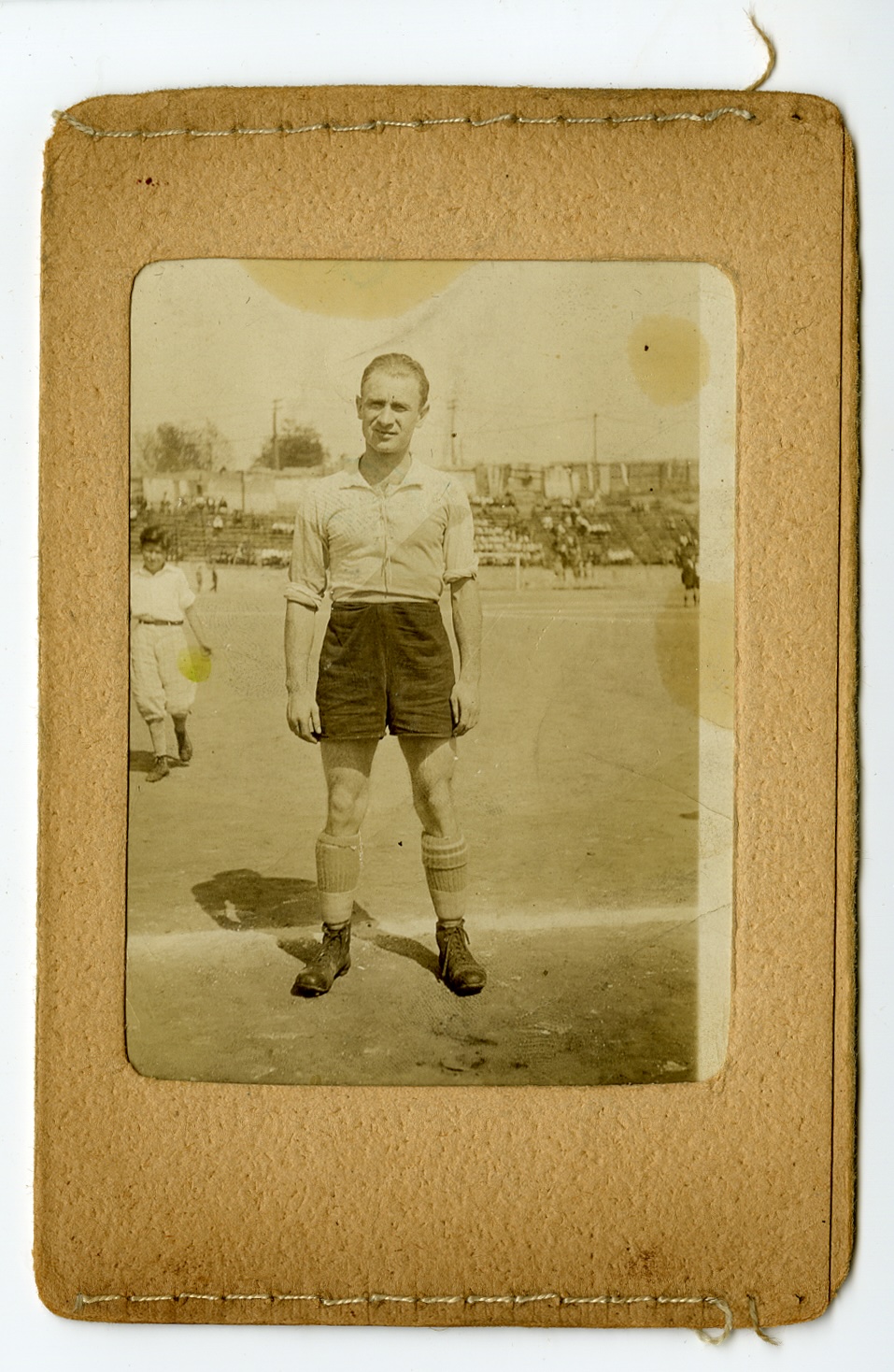
“Tell Our Boy That I Played Soccer Again” is a new installation at the Museum of Jewish Heritage: A Living Memorial to the Holocaust (36 Battery Pl.), and is on view until July 31. It tells the story of Paul Mahrer, a Jewish professional soccer player and Holocaust survivor.
Mahrer was born in Czechoslovakia in 1900 and began his career with DFC Prag, for whom he played between 1923 and 1926. During this period he won six caps with the Czechoslovakian national team, including two games at the 1924 Summer Olympics. In 1926 he moved to the USA, where he played in the first American Soccer League during a period where soccer was popular and the standard in the ASL high enough to attract many prominent European internationals. He spent a season with Brooklyn Wanderers and then signed for Hakoah All Stars, for whom he played 127 games, scoring four times.
In 1932, with the “soccer wars” of the 1930s raging and the ASL near collapse, Mahrer returned to his native Czechoslovakia to sign with Teplitzer FK, before finishing his career in 1936 in the same place it started, with DFC Prag. Then, the Nazis invaded Czechoslovakia. Mahrer was separated from his wife and son and interned in the Theresienstadt ghetto.
The exhibition centers around letters he was able to send to his wife; no easy task, because the rules on letter-writing at Theresienstadt were as byzantine as they were fickle and arbitrary. HG Adler’s book “Theresienstadt 1941–1945” contains detailed accounts of these ever-changing regulations. (Adler himself was deported to the ghetto in 1942, and from there to Auschwitz and Buchenwald; he survived and moved to the United Kingdom after the war, where he wrote a number of books on the Holocaust.)
Adler explains that inmates at Theresienstadt were at first promised permission to write letters twice a month, but “this promise was never fulfilled”; by early 1942, “illegal mail contacts were expressly punishable with the death penalty.” But September of that year brought a change: prisoners were suddenly allowed to send messages of no more than 30 words to the outside world. Even during the periods when writing was forbidden, guards would smuggle letters in exchange for bribes.
It’s from the contents of one of the letters that Mahrer was able to send that the exhibition takes its title: “Tell our boy I played soccer again,” Mahrer writes, “and even played well.”
There are very few happy endings to such stories — of the nearly 150,000 inmates at Theresienstadt, almost three quarters died, either in the ghetto itself or in various concentration camps. Mahrer, however, survived, as did his family. They were reunited after the war, and moved to the USA, where Mahrer lived until the age of 85.
Book your tickets to “Tell Our Boy That I Played Soccer Again” here.
Tom Hawking is a Brooklyn-based writer, editor and football fanatic. Find him at his website.
main photo: Photograph of Ha-Koach soccer team, including Paul Mahrer 2nd from left kneeling in front row, New York, 1920s. Collection of the Museum of Jewish Heritage, Gift of Jerome and Carolyn Mahrer, 1999.P.198


