
There are two ways to see New York’s long-abandoned City Hall station. The first is to ride a downtown 6 train to its terminus at Brooklyn Bridge – City Hall, and remain onboard until it begins its signature turnaround loop to go back uptown. About halfway through, you can peek out the train window to catch a brief (albeit dim) glimpse of the station’s magnificent arches, detailed tilework and cave-like structure. Though this method has its charms — it’s accessible, quick, and a genuinely fun piece of NYC lore to unlock — we can’t help but recommend the second way: securing a coveted ticket to the New York Transit Museum’s walking tour of the station. It’s a one-of-a-kind, only-in-New-York experience that reveals fascinating details about the political, social and architectural history of Lower Manhattan and the city at large.
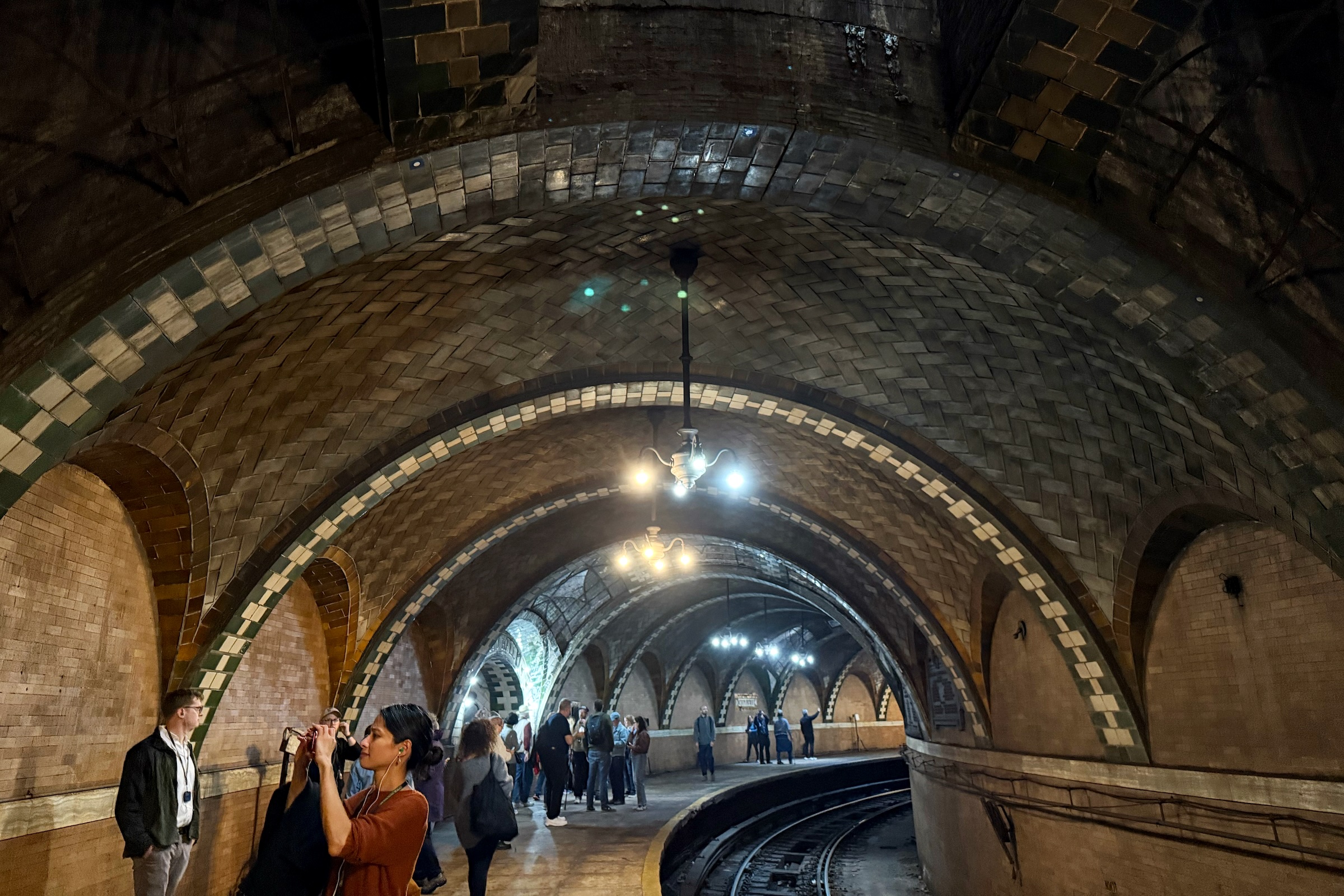
To get into the old City Hall station, Transit Museum tour participants get to do something the general public has not been able to do since 1945: board a 6 train that opens its doors halfway through the loop, and step out onto the curved platform, below glowing chandeliers and elegantly tiled ceilings, with the daylight filtering in through the once-magnificent stained glass skylights. The station’s entryway, up a short flight of stairs from the platform, is all vaults and arches building up to another intricate skylight, positioned directly over the spot where a grand wooden ticket booth once stood. Even in its current state — decades of neglect manifest in missing glass panes, cracked tiles and a layer of age that keeps the platform a worn ruddy brown — the station is breathtaking in its grandeur.
The City Hall station is a product of the City Beautiful movement, an architectural and urban planning reform that swept North America starting at the turn of the 19th century. The movement spearheaded public works projects with a focus on beautification of cities, in the hopes that grand, dignified public spaces would increase civic virtue and the quality of life in urban areas. Though controversial for its emphasis on aesthetics over social reform, City Beautiful was appealing to artists who believed that art and architecture was not just for the ruling class, but for the public.

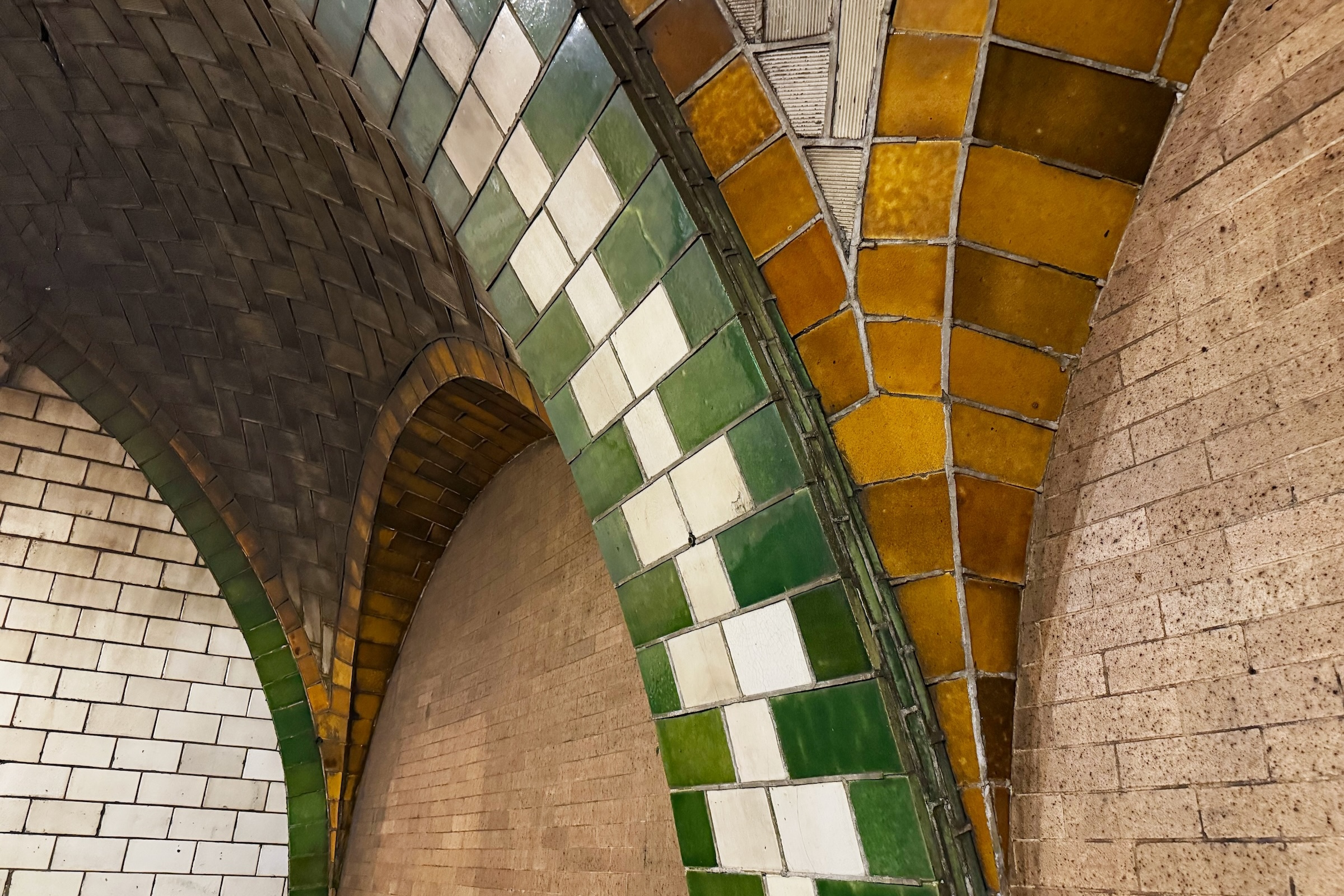
The architects of the City Hall station, Rafael Guastavino Moreno and his son, Rafael Guastavino Esposito, worked on several City Beautiful-era projects, including the Oyster Bar at Grand Central Station, the Registry Room at Ellis Island and the Cathedral Church of St. John the Divine. The aesthetic link between these famous locations is the eponymous Guastavino tile arch system, which layers terracotta tiles in a herringbone pattern to create strong, self-supporting vaults. The station’s Guastavino tiles are in remarkably good condition, the emerald greens and deep yellows still vibrant after all these years.
It’s obvious that City Hall received especially unique attention during its construction. Its fineries and architectural details are fitting for the station that begins the city’s entire subway system — the poster child of a public works project of unimaginable proportions. It’s an incredible feat, considering that less than half a century before the station’s construction, the state of transportation in New York City was defined by dangerous sanitation issues, egregious animal rights violations and mass corruption. To illustrate the strides the city took in this relatively short amount of time, the Transit Museum’s tour doesn’t start in the station.
Rather, the “Jewel in the Crown: Old City Hall Station” tour begins above ground in City Hall Park, and immediately sets the scene of the years leading up to the construction of New York’s first underground subway line. Late into the 19th century, Lower Manhattan was not only heavily populated with residents, but was also the city’s epicenter of media, finance and politics, with the powers of Park Row (aka Newspaper Row), Wall Street and City Hall (controlled by Boss Tweed’s corrupt Tammany Hall government) all colliding south of Chambers Street. The city was growing, downtown was bustling, and the options for getting around — unsanitary horse-drawn carriages and Tammany-controlled omnibuses — left much to be desired.
The first attempt at a subway system came courtesy of Ely Beach – inventor, entrepreneur, and son of publishing magnate Moses Yale Beach. Beach had traveled to London and taken stock of their underground transit system, which had successfully eased street congestion and improved the quality of life in the city. Inspired, he returned to New York and began developing a similar technology, with one crucial difference. Instead of steam engines, Beach’s trains would be powered by pneumatics — pressurized air that propels train cars through cylindrical tubes.
Defying the rejections of the Tammany Hall government, whose dubious financial involvements with streetcar and omnibus companies were threatened by the new railway proposal, Beach began digging his own tunnel under the cover of night, funding the project with his personal fortune. Thus, the very first cylindrical pneumatic tube passenger railway in America opened in 1870, carrying riders 312 feet between Warren and Murray Streets in Lower Manhattan. In the short time it operated, 400,000 people rode the miniature train line, which was outfitted as a luxury experience with a koi pond and piano player at the entrance and art lining the train car walls.
The popularity of Beach’s experiment reemphasized the public’s desire for a subterranean rail system. Coupled with the 1872 equine influenza pandemic that sickened and killed nearly all of New York’s transit horses, and a devastating blizzard that exposed the limits of above-ground railways in 1888, the need for a better transportation option to service the city was undeniable.
Years of planning, legislation and navigating bureaucratic red tape and limitations imposed by privately owned transit companies ensued, before the Supreme Court approved the plans to build a subway system in New York City in 1900. Contractor John B. MacDonald was awarded the construction contract, funded by millionaire August Belmont, and the Interborough Rapid Transit Company was born. On March 24, 1900, construction on the subway began with a groundbreaking ceremony on the steps of City Hall, as Mayor Van Wyck symbolically turned over a patch of dirt with a silver shovel made by Tiffany and Co. On October 27, 1904, the first subway system in New York City officially opened to the public, met with incredible fanfare and excitement. The original subway system had 28 stops running from Lower Manhattan to 145th street and Broadway, with the City Hall station as the crown jewel.
The station’s lifespan as the star of the system was short. The last trains pulled out of City Hall on December 31, 1945. The steeply curved platform that had been expertly constructed to draw a tight circle between the old Post Office, City Hall and the Municipal Building was now obsolete — too severe to accommodate new, longer trains; too expensive to bridge the gaps left between the newly-positioned train doors and the platform and too dangerous to leave them; and ultimately, too close to the Brooklyn Bridge station for repairs to be necessary. In the second half of the 20th century, the station sat unused, save for the 6 trains that continued to use the loop, rattling along the tracks dozens of times per day, knocking glass loose from the skylights.
Today, the station is a time machine — a relic of a transformative era in New York’s history that brought the city into the modern world. To visit it is to be reminded that investing in public space that works for the public can have spectacular results. If you are interested in touring the old City Hall station, the New York Transit Museum runs tours three times a year. Tickets are in limited supply, and are available to museum members only.


