
LM Live Recap: Stanford White, Augustus Saint-Gaudens and Gilded Age New York
September 17, 2025
LM Live’s new season kicked off on September 16 with a lively fireside chat about New York’s Gilded Age. Journalist and historian Henry Wiencek and Ephemeral New York founder Esther Crain chatted with moderator Rachel Syme about Wiencek’s new book, “Stan and Gus: Art, Ardor, and the Friendship That Built the Gilded Age,” which focuses on Gilded Age icons Stanford White and Augustus Saint-Gaudens, and how their intense friendship (and more) dovetailed with the rise of industrial capitalism and immense wealth that characterized the late-19th century.
White, the architect behind New York masterpieces like the Washington Square Arch and the magnificent second Madison Square Garden, was one of New York’s most significant Gilded Age characters. A notorious playboy, in 1906, White met an untimely end at one of his own creations when he was shot three times by millionaire Harry Kendall Thaw on the roof of Madison Square Garden. Thaw was married to Evelyn Nesbit, an actress with whom White had an affair (and reportedly sexually assaulted), and went after White in retribution; postmortem, many of White’s exploits and misdeeds came to light.
Saint-Gaudens, meanwhile, was a celebrated sculptor whose works included the “Robert Gould Shaw Memorial” on Boston Common and the William Tecumseh Sherman statue at the base of Central Park. He and White met by chance near Union Square, and quickly became collaborators — Saint-Gaudens sculpted the iconic Diana statue that famously perched atop White’s Madison Square Garden until the building was demolished in the 1920s — as well as friends and, per Wiencek’s book, lovers.
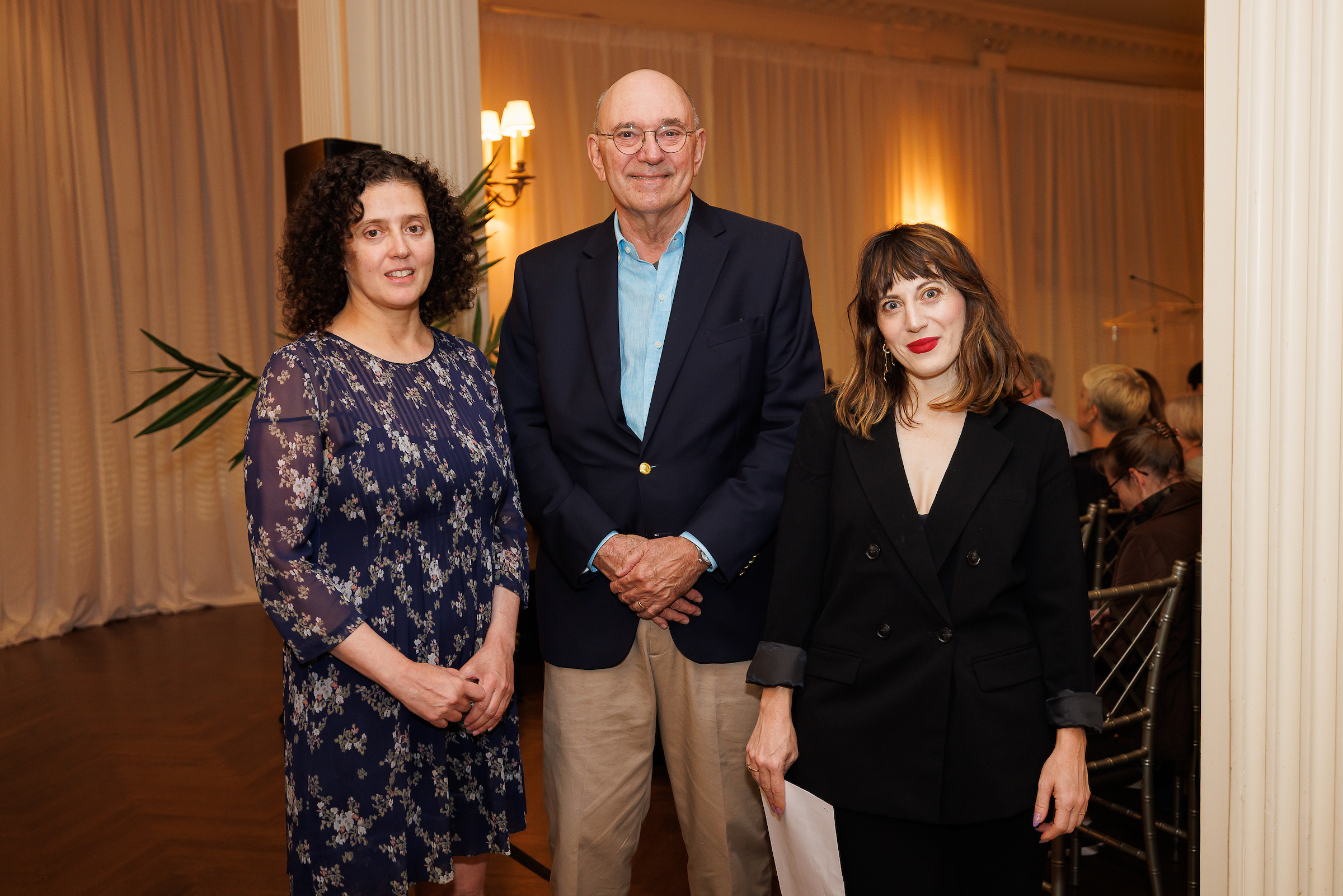
“Especially in the documents of Saint-Gaudens, you see a passionate relationship,” Wiencek, who read hundreds of papers and letters belonging to the duo, said. He emphasized that the passion was physical, emotional and creative in nature. “Stanford was [Saint-Gaudens’] rock, and Stanford saw that Gus could access psychological depths that Stanford couldn’t. They were always bouncing ideas off each other,” he said.
“It was like a marriage,” Crain added. “They complemented each other in the right way.”
Wiencek and Crain drew parallels between our current moment and the Gilded Age, which has seen increased interest of late, in part because of the eponymous HBO series cataloging the exploits of 19th-century New York society.
“There was always a sense of something sinister during the Gilded Age,” Wiencek said. “It was wealth chasing its own tail.”
Crain noted that part of the Gilded Age’s contemporary appeal is that it feels like “a fairy tale.”
“You had scandal, you had corruption, you had wealth,” she said. “There’s something innately fable-esque about it.”
And Crain cautioned making too close a comparison between the two eras. “There are parallels between the Gilded Age and now, but the poverty and struggle of the original Gilded Age was much greater,” she said, noting that the late 19th century lacked a social safety net or labor protections.
Wiencek lamented the loss of some of the Gilded Age architecture (including White’s Madison Square Garden) and championed modern landmark laws that have preserved some of the city’s most beautiful historic buildings. “For both eras, the only constant is change,” he said.


