
10 Years in the Making, Trinity Church’s New Organ Is Here to Sing
February 11, 2026
To talk about the new pipe organ at Trinity Church is to marvel at the numbers. 8,041 pipes — 32 feet for the longest, the shortest coming in at about the length of a pencil. Roughly 10 years of design and construction. A 180-year-old wooden case (the oldest continuous piece of furniture in the church) that houses the truly magnificent instrument. Four sets of stairs and ladders used to access the organ’s pipes in the back of the chapel. 61 keys and 113 stops, which are the knobs above the keys that allow the organist to select different sounds.
The organ, which we literally got an inside look at in January, has had a journey unto itself. German company Glatter-Götz Orgelbau and tonal designer Manuel Rosales began work on the complex instrument in 2015. As of January, it was “in the final stages of getting built,” according to Trinity Church’s head organist Avi Stein.
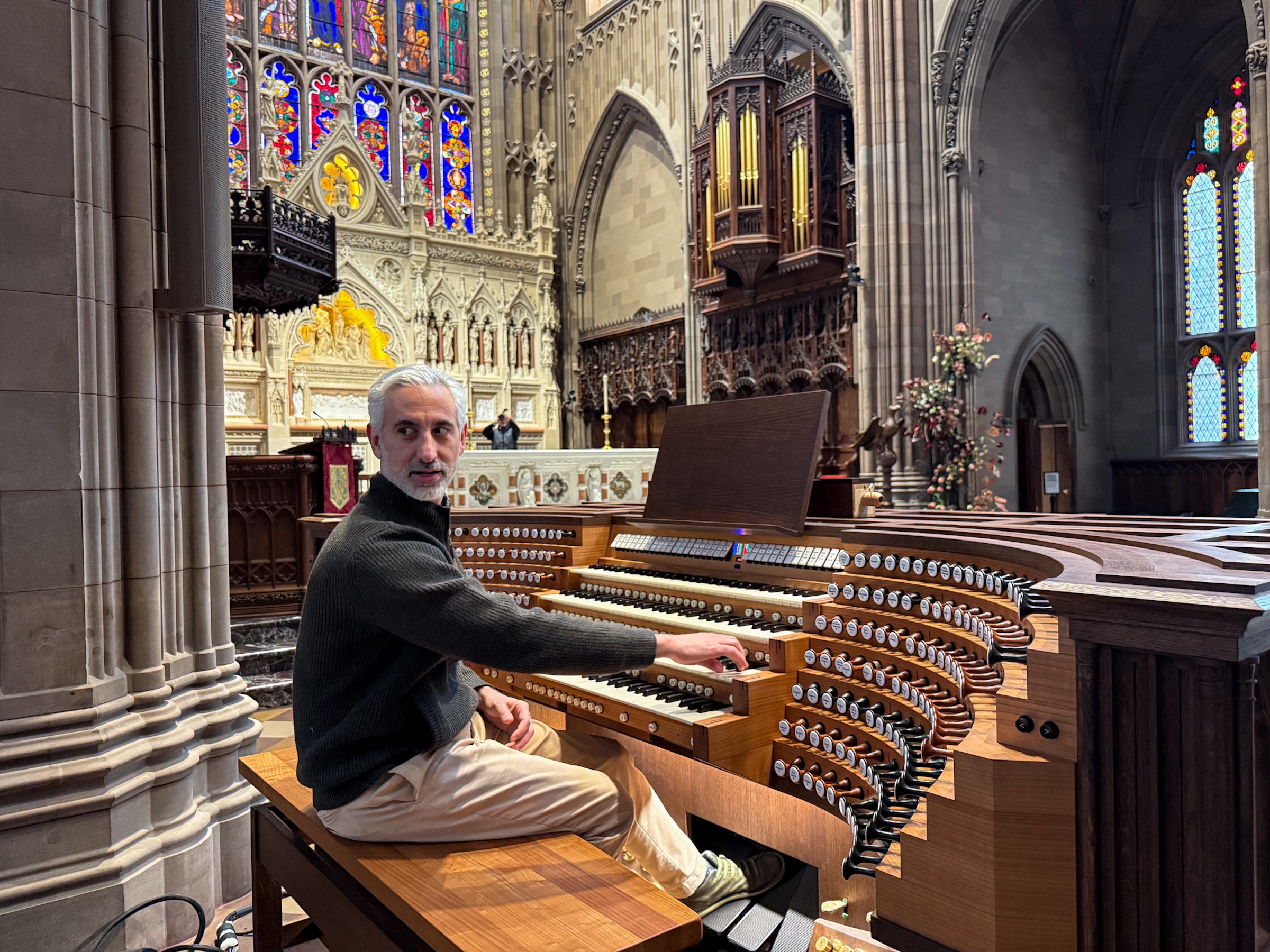
The new organ replaces one that was damaged by dust that got into Trinity Church following the 9/11 attacks. In the interim, the church had an electronic organ that used digital sounds rather than actual pipes. The sound from the new organ is “completely acoustic,” according to Stein. “Everything is pipes. There are no digital samples or anything like that,” he said
The organ’s sounds are controlled from a console in the chapel. When Stein presses a pedal or key, it sends a signal via connected wires that opens up a hole in the pipes to release pressurized air, creating music. There are sets of pipes at the front and the rear of the chapel that can be controlled from the same console.
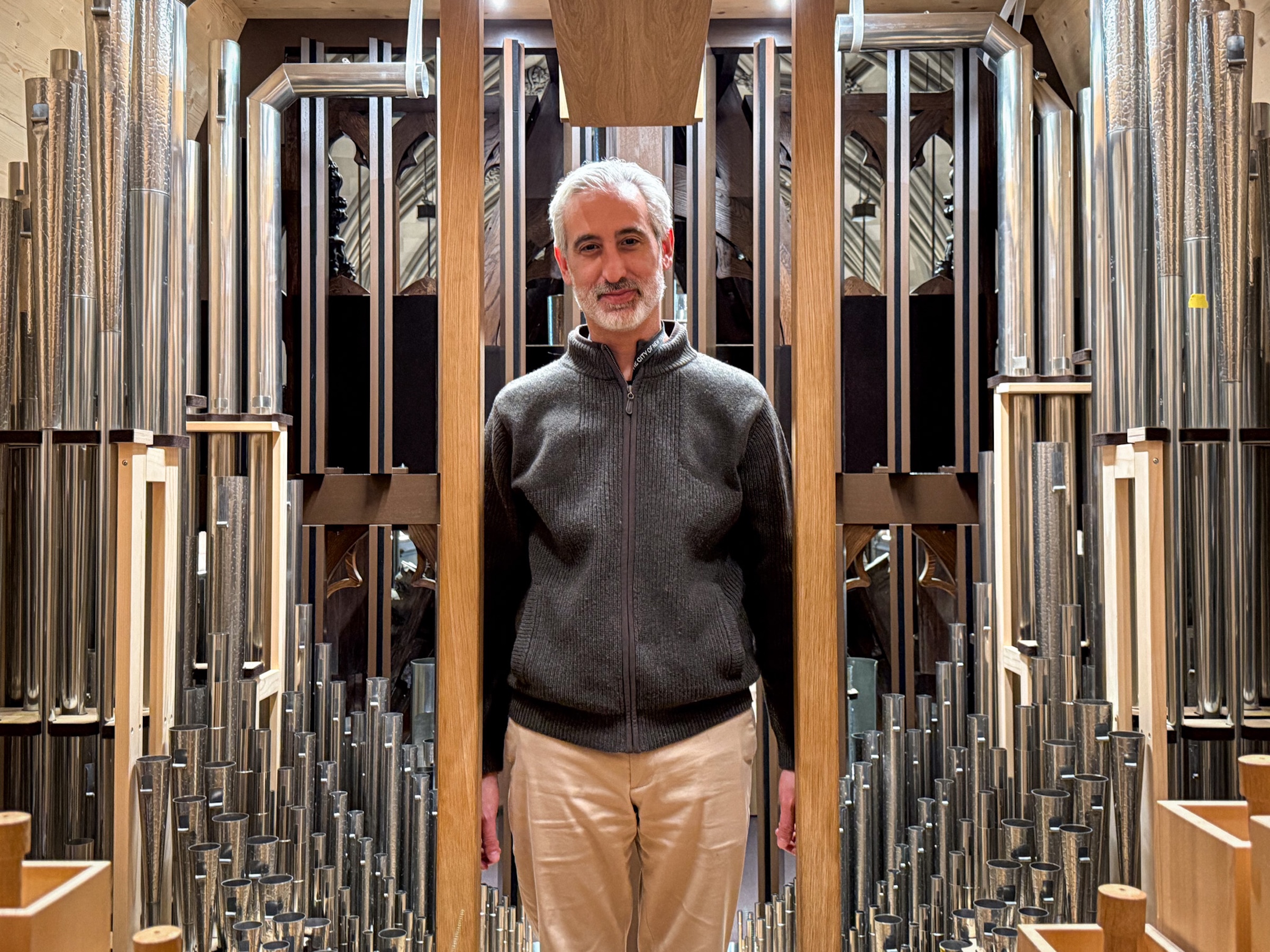
“We can make organ-specific sounds, and more orchestral sounds like trumpet or oboe,” Stein said, pointing out sets of pipes echoing instruments like English and French horns. “Those are the kinds of sounds that people started building in the early 20th century when they wanted to play symphonies on the organ.”
Church visitors won’t just get an instrument upgrade. Between 2018 and 2020, the church was renovated to enhance the organ’s sound, making the musical experience even more magical. “With something like a violin, you’ve got the strings that make the sound and then the box that amplifies it. With an organ, the room itself is the amplification,” Stein said.
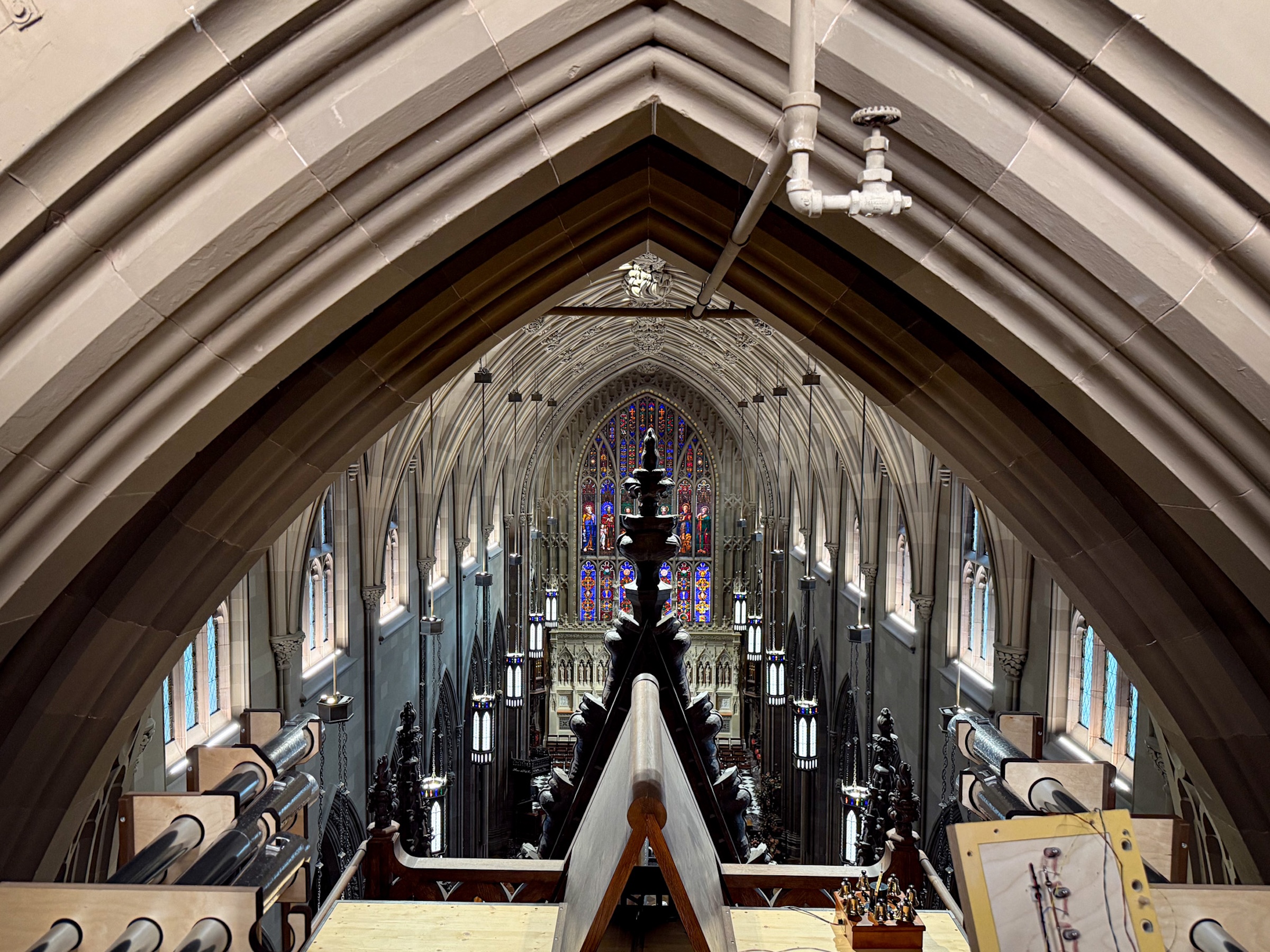
Stein noted that the church added concrete under the floor and thickened the walls, creating improved reverberation, better bass response and warmer sound. There’s also a new wall behind the organ, which helps push the sound out.
If you’re looking to hear Trinity Church’s improved acoustics for yourself, the main organ is used during Sunday services and at the noon service Monday through Thursday; a smaller organ in the Chapel of All Saints is used for the noon service on Fridays. Trinity Church’s concert programming will also feature the organ in several upcoming performances, including on February 24 and April 22.


