
So, What Exactly Is Art Deco? A Guide to Downtown Deco Architecture
February 10, 2026
If you crane your neck to look up in Lower Manhattan, chances are you’ll be able to see at least one example of Art Deco architecture. The style that grew to become the Art Deco movement first began in 1925 in Paris at the Exposition Internationale des Arts Décoratifs et Industriels Modernes, though the term “Art Deco” itself didn’t come into use until the 1960s (it was previously called “Art Moderne”). In the years that followed, from 1925 until the early 1940s, Art Deco came to be a popular international visual style for everything from fashion to advertising.
In architecture, the Art Deco movement is primarily characterized by its verticality. Why? Zoning. When the Equitable Building, a neoclassical skyscraper at 120 Broadway, was completed in 1915, it created an interesting problem. The 40-story rectangle, which features no setbacks and comprises an entire block, darkened the streets with its shadows, prompting complaints. (One critic called it a “monstrous parasite on the veins and arteries of New York.”) As a result, in 1916, New York adopted its Zoning Resolution, which requires buildings taller than a certain height to incorporate setbacks toward the top so sunlight can reach the street.
Once the economy largely recovered from WWI in the mid-1920s, these soaring Art Deco skyscrapers with tapered setbacks, which were largely banking towers, decorated downtown as a symbol of modernity and prosperity.
Although the buildings themselves were usually streamlined and simple in aesthetic, architects expressed the decadence of this post-WWI era with ornamentation and details on skyscrapers, especially in tilework or mosaics, reliefs, decorative trims and moldings. The style drew inspiration from other artistic movements, like the clean lines and dynamism featured in Italian Futurism and Cubism’s geometric shapes. Historic motifs from ancient Egypt, and other parts of Africa and Asia — think sunbursts, zigzags and foliage — were common. Lavish materials like marble, granite, chrome and pewter were often used in facades and interiors to play up the grandeur and drama of the time period. Eventually, the opulence of the Art Deco era (notably sandwiched between the austerity of two world wars) was replaced by the functionality and minimalism of glass and steel Modernism and midcentury modern interiors, which you’ve probably seen lately on Pinterest.
Today, 100 years after the movement first started, you can find more than a dozen examples of Art Deco architecture in Lower Manhattan. Here are 16 buildings design lovers and history buffs can check out in the district:
1 Wall St. (1931)
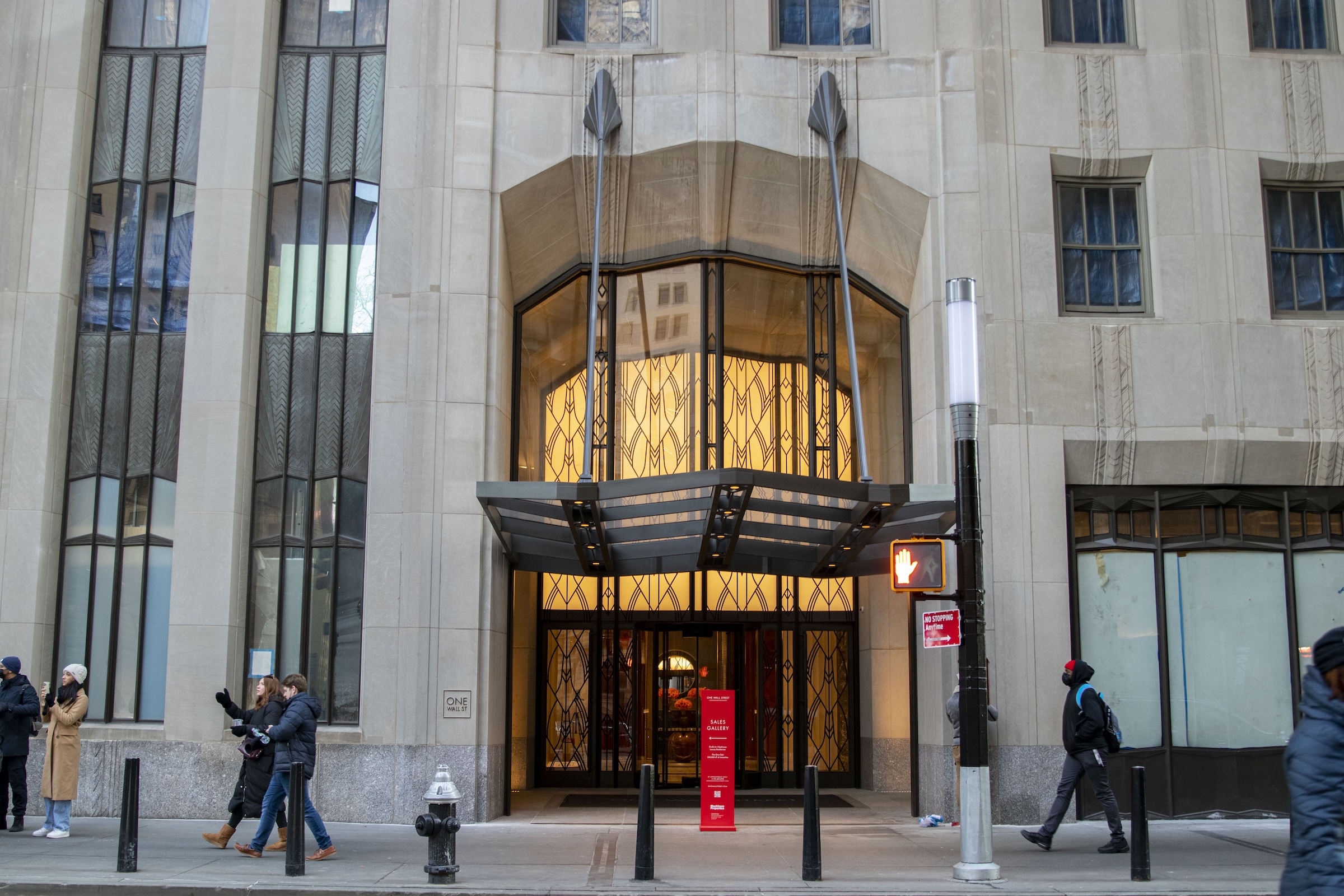
The building’s original exterior, all 52 floors of limestone facade, was designated as a city landmark in 2001.
14 Wall St. (1912)
Though the granite-clad skyscraper originally opened in 1912, a later 25-story addition, including its distinctive seven-story stepped pyramid top, was completed in 1933.
20 Exchange Pl. (1931)
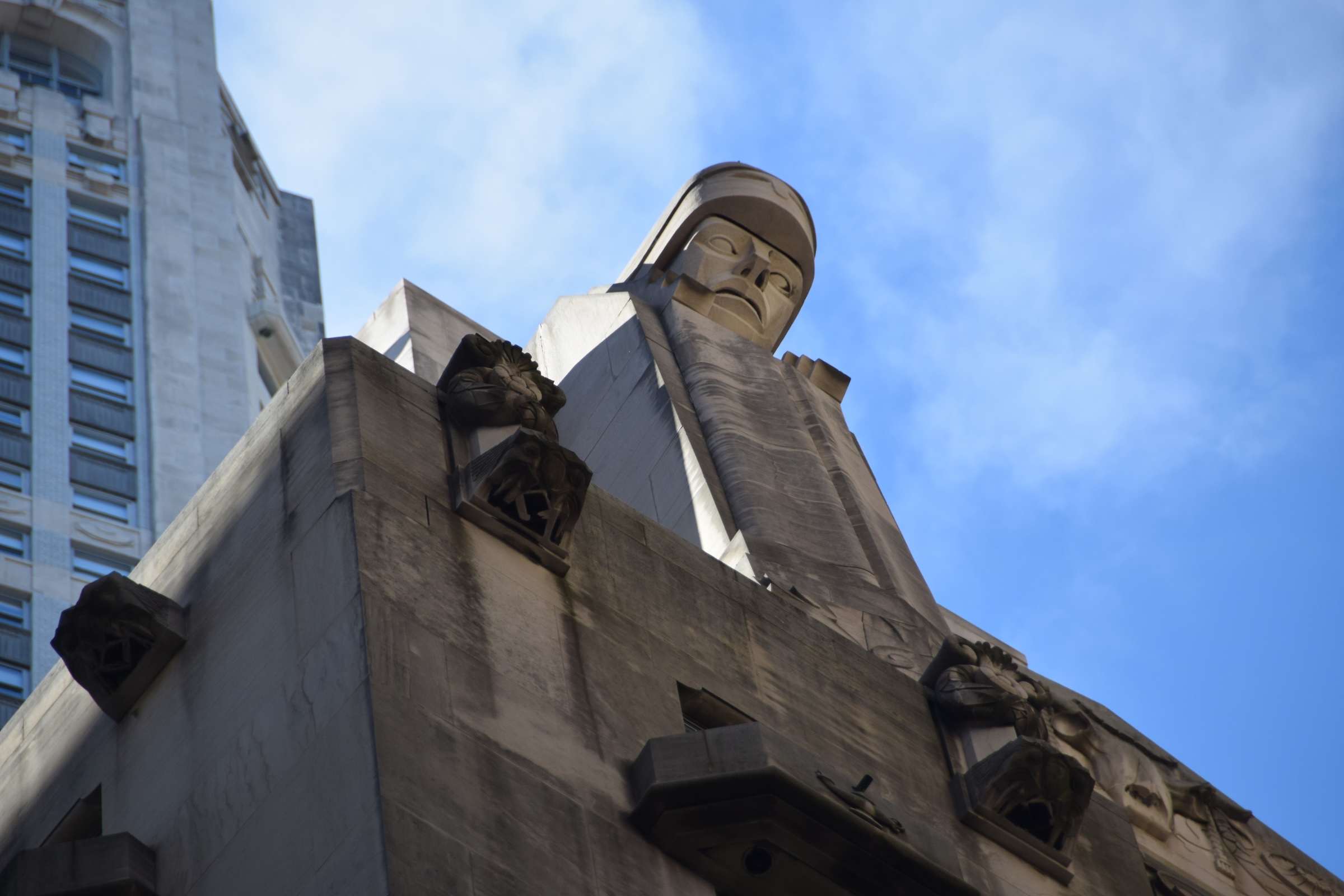
In 1931 it was one of the city’s tallest buildings and the world’s tallest stone-clad building with 57 stories.
21 West St. (1931)
Aside from the brick and terracotta structure’s tapered setbacks, you can find Art Deco elements on the ground floor, both in interior lobby details like the marble floor mosaic and ornamentation on the ceiling of the covered arcade walkway along West and Morris streets.
29 Broadway (1931)
A sculptural entrance draws the eye upward to a series of staccato details that emphasize the building’s verticality. Plus, step inside to glimpse the exquisite lobby vestibule, lined with striated marble and aluminum.
70 Pine St. (1932)
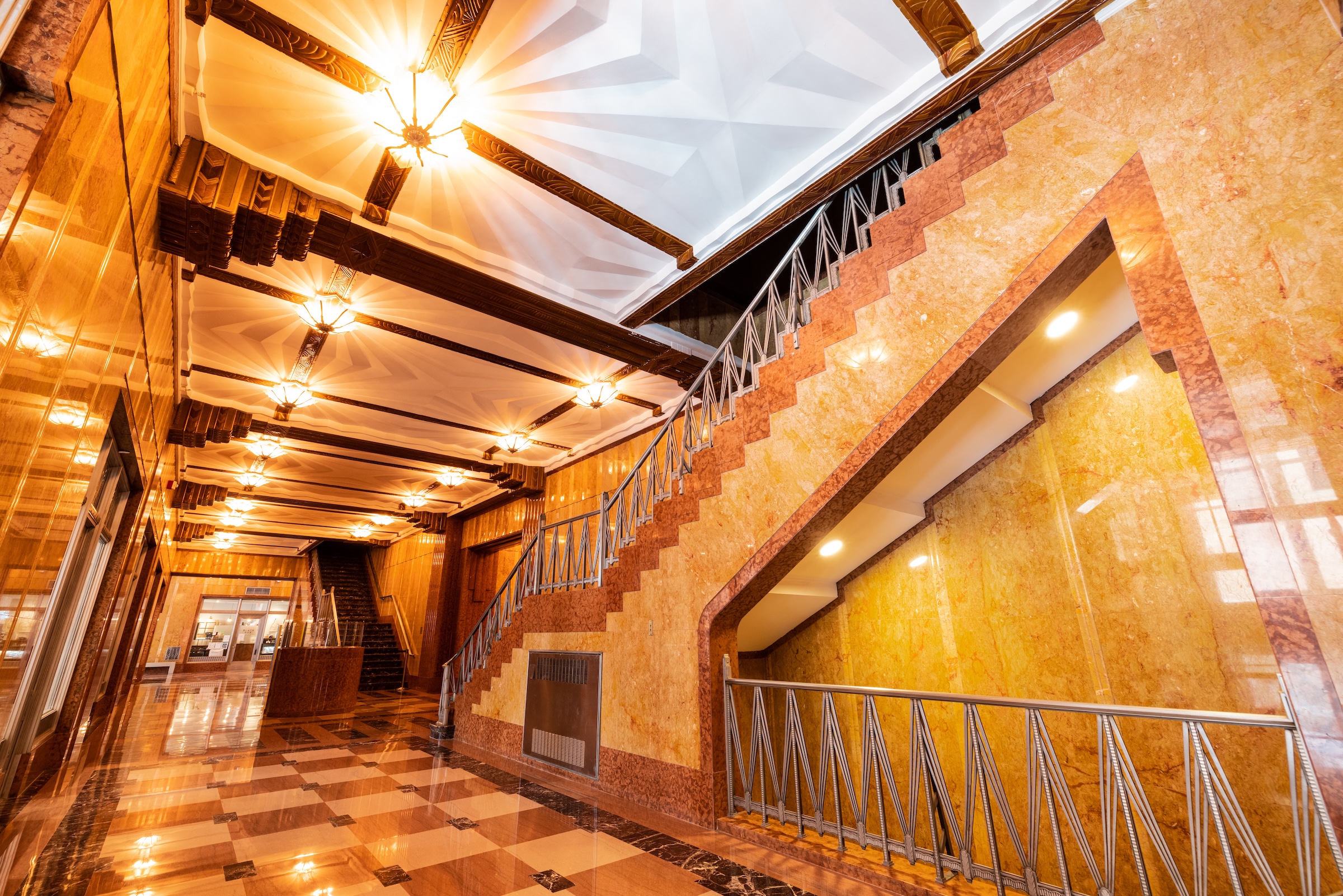
70 Pine St. is one of the more intricately designed Art Deco skyscrapers downtown with its distinctive spire punctuating the skyline, as well as details more easily seen from the street, like carved reliefs above the entrances and its ornate lobby with multicolored marbles with Native American motifs and elaborate metalwork.
90 Church St. (1935)
The limestone clad federal office building on the National Register of Historic Places takes up a full city block between Church Street and West Broadway and Vesey and Barclay streets.
120 Wall St. (1930)
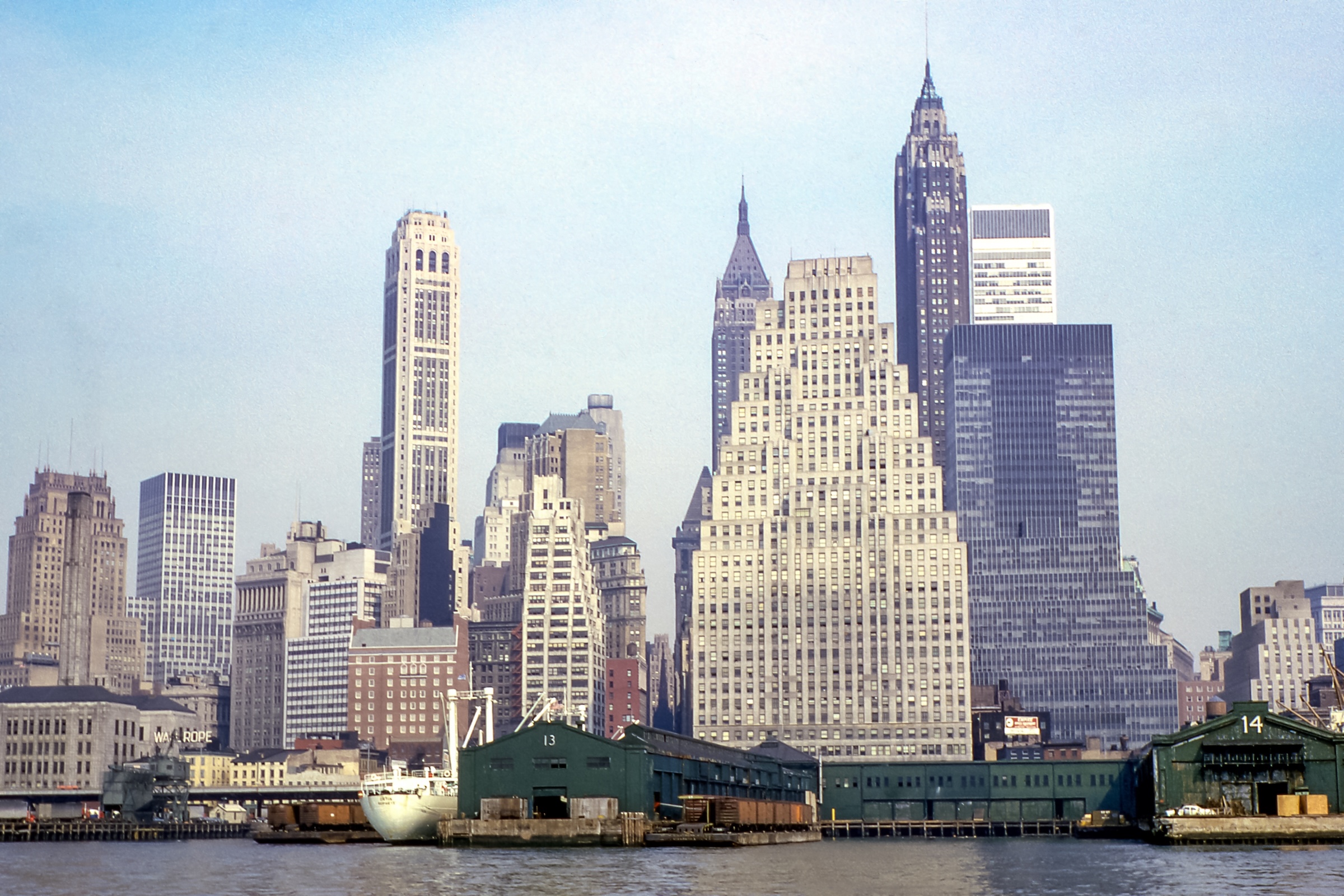
The Wall Street entrance of the office building is unmistakably Art Deco, with dramatic gold and black fan motifs above the rotating doors, all framed in red granite.
123 Greenwich St. (1921)

Though the original American Stock Exchange Building was completed in 1921, its eastern expansion in the Art Deco style was completed in 1931.
116 John St. (1931)
The historic office tower designed by architect Louis Abramson has 12 upper floors that taper towards the top. The entrance, flanked by grand columns, features intricate metalwork above the doors. The lobby is also especially period appropriate with marble-clad walls and floors and inlay metal chevron trim.
30 Broad St. (1932)
The 48-story tower next to the New York Stock Exchange known as the Continental Bank Building was designed by architects Morris and O’Connor in 1931 and was completed in 1932.
Downtown Athletic Club (20 West St.) (1930)

The 35-story building designed by Starrett & van Vleck held the Downtown Athletic Club’s sports spaces plus living and dining quarters. One distinctive Art Deco feature seen from the ground is the chevron pattern in the spandrels above the West Street entrance. Fun fact: this is where the Heisman Trophy was issued for years — named after the club’s first athletic director, John Heisman.
88 Greenwich St. (1930)
This 37-story residential building was designed by Lafayette A. Goldstone and Alexander Zamshnick.
New York Evening Post Building (75 West St.) (1926)
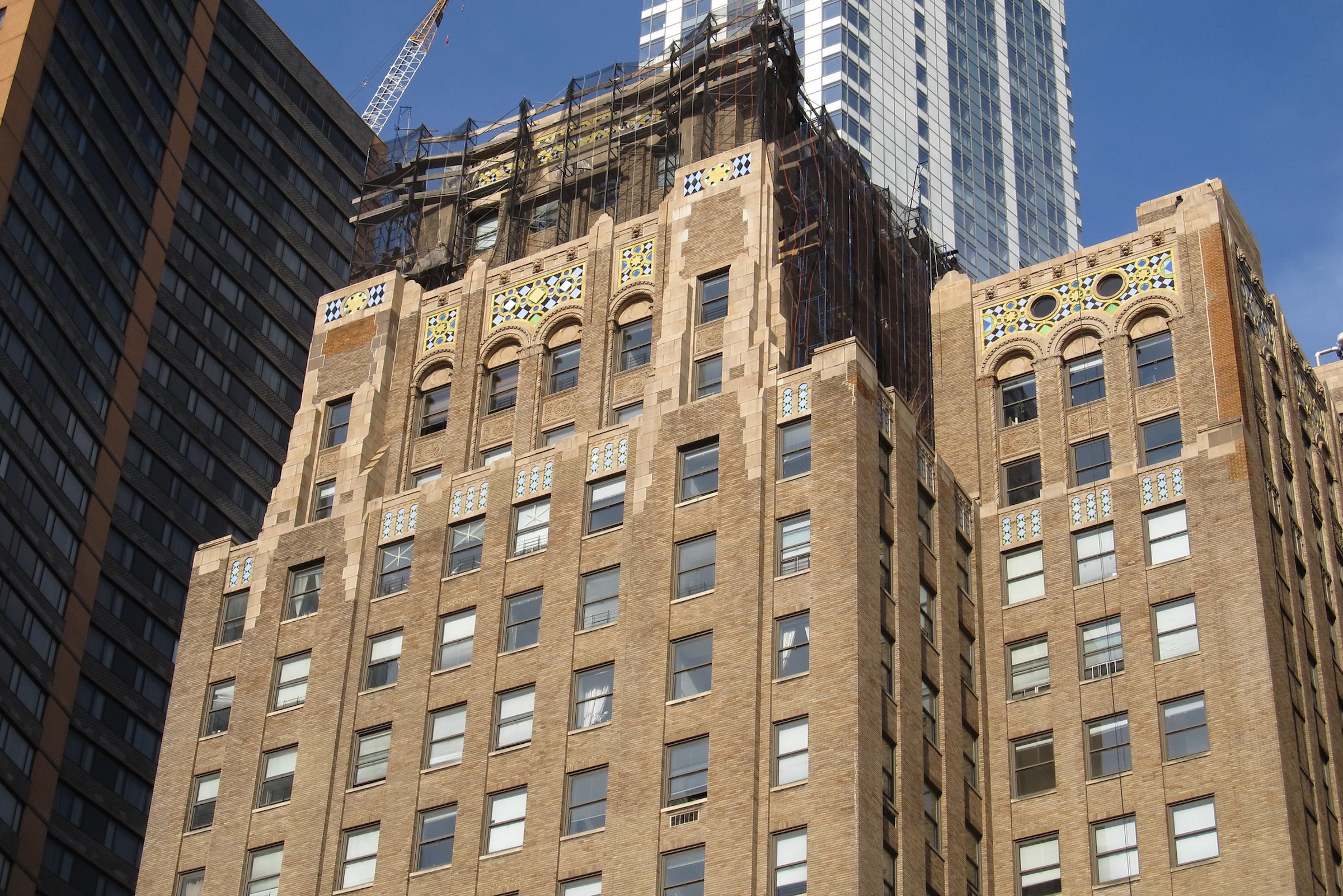
Look up to see beautiful Guastavino tile detailing and terra cotta ornamentation on this brick behemoth, which is on the National Register of Historic Places. The New York Evening Post occupied this 17-story building from 1926 until 1970. Today, the building, which is on the National Register of Historic Places, is residential.
Barclay-Vesey Building (140 West St.) (1923-27)
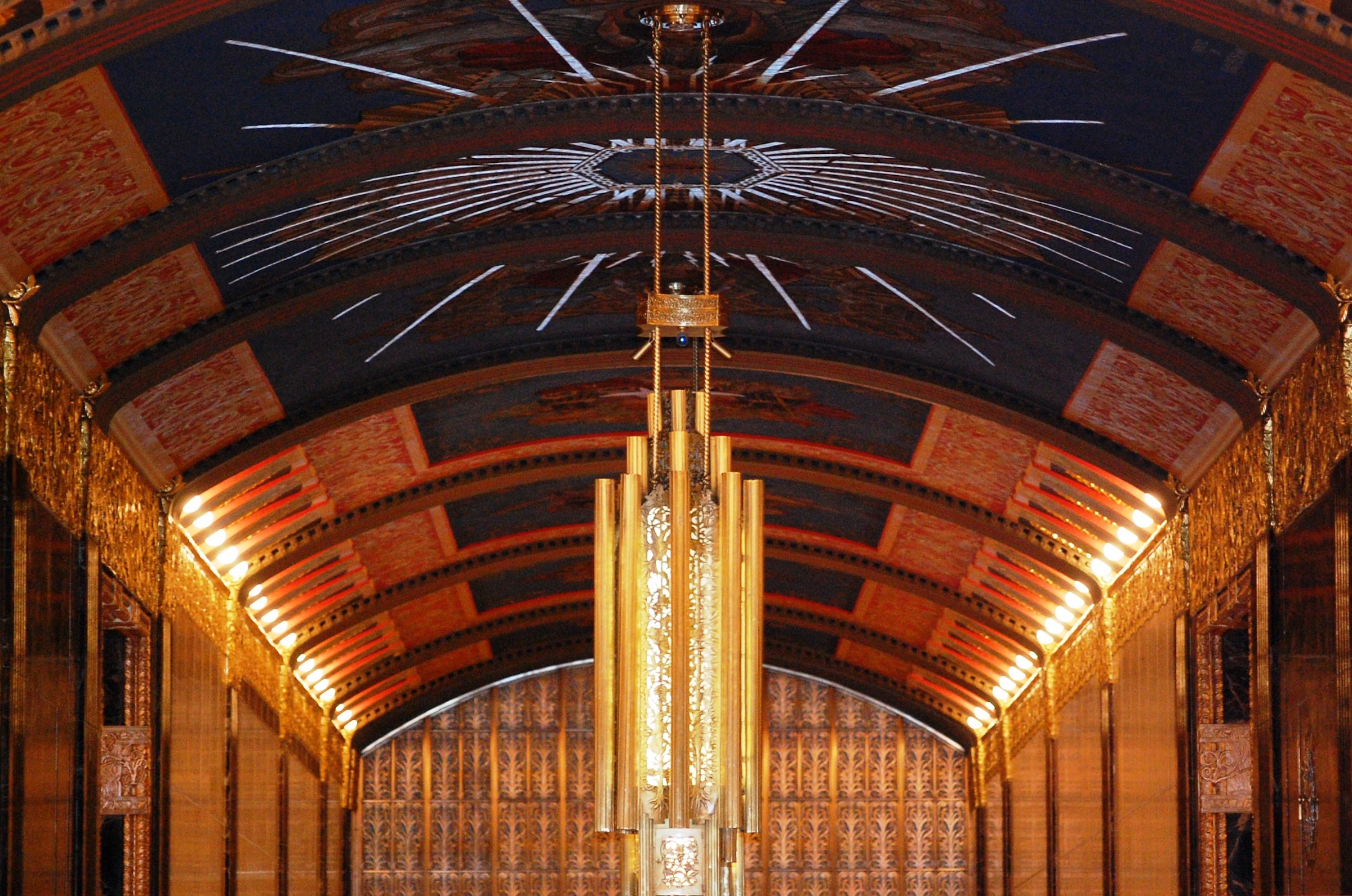
The Barclay-Vesey Building, aptly named for its proximity to Barclay and Vesey streets, was designed for the New York Telephone Company in 1923 as one of the first major Art Deco buildings — and architect Ralph Walker’s first major commission! Though it is now residential, the lobby (an interior landmark draped in bronze, marble and travertine) is open to the public for viewing its murals in all of its original splendor.
80 Broad St. (Maritime Exchange Building) (1931)
Four seahorses guard the entrance to the former Maritime Exchange Building as a nod to its original tenant. Bas reliefs of ships surround the seahorses as a reminder of Lower Manhattan’s historic relevancy as a maritime city.

Bonus: Within 1 Wall St. is the Red Room, one of the finest and most extravagant examples of Art Deco interiors, and a designated New York City interior landmark. The standout space, completed in 1931, glitters with thousands of intricately laid red and gold mosaic tiles lining the walls and ceiling. It was designed by muralist Hildreth Meière in collaboration with architect Ralph Walker as a private banking hall for wealthy clients of the Irving Trust Company. Today, the Red Room is open to the public as part of the Printemps New York retail space.
main photo: iStock


