
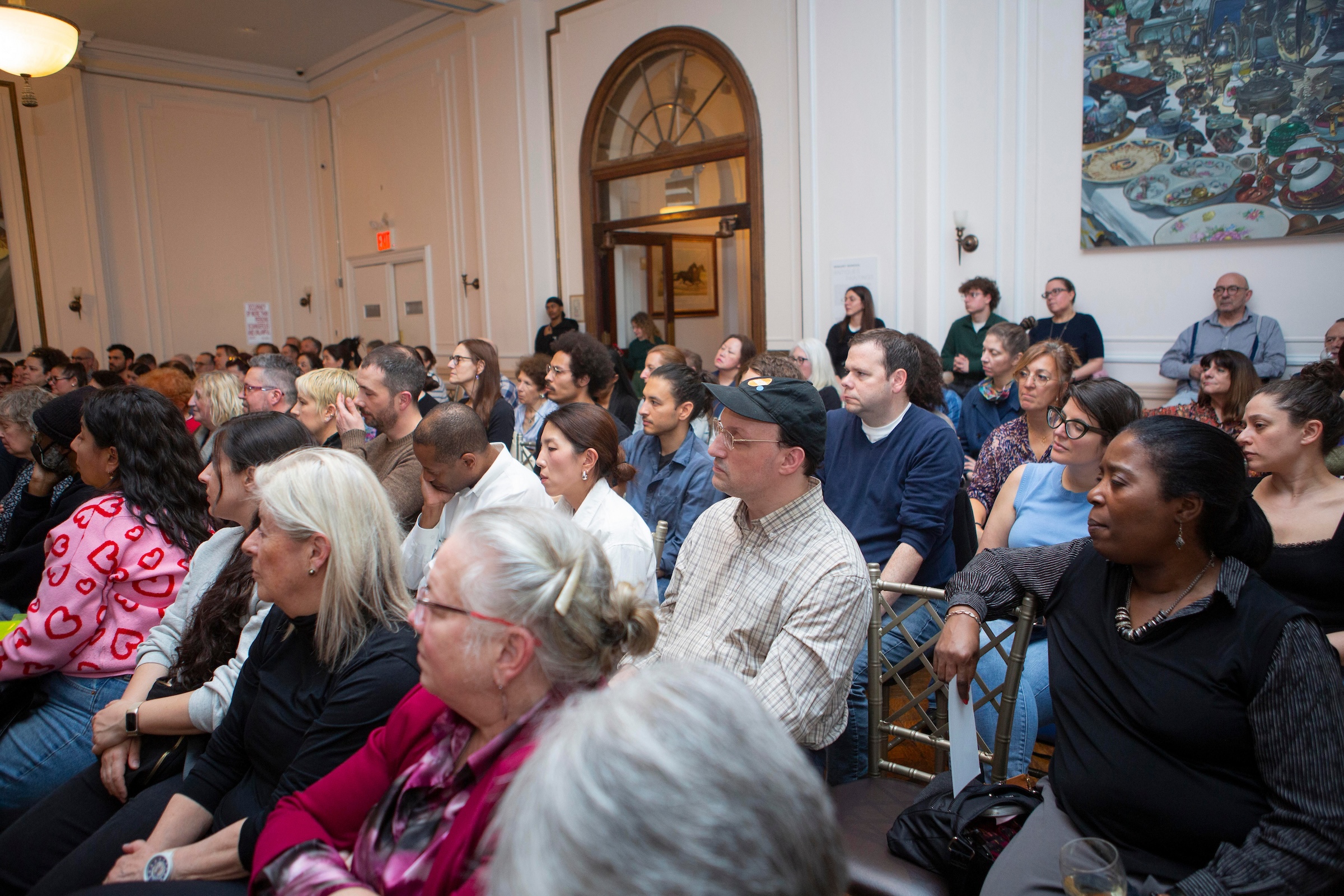
The mid-to-late 1980s were formative years for New York, marked by the tumultuous Ed Koch administration, the rise of the city’s Wall Street class and the amplification of notable New York characters like Donald Trump, Al Sharpton and Spike Lee. Jonathan Mahler, a staff writer for The New York Times Magazine, explores these years (specifically 1986 to 1990) in his new book, “The Gods of New York,” which he discussed at our March 10 LM Live event.
Joined by editor-in-chief of the Forward Alyssa Katz, Mahler noted that he’d been inspired to write the book while reporting on the 2016 presidential election and Trump’s rise. Though he didn’t want to focus solely on the then-presidential candidate, Mahler had written about New York in the 1970s in his 2005 book, “Ladies and Gentlemen, the Bronx Is Burning” and thought the following decade, which saw Trump’s meteoric rise, would be a natural fit for a follow-up.
“The 1970s was New York at its spiritual and financial bottom,” Mahler said. “The ‘80s is when New York was reborn.”
Indeed, in the 1980s, a depleted city economy was rebuilt around Wall Street, with massive booms in finance, real estate, insurance and other high-flying, powerful industries. Trump was a regular tabloid figure at the time, as was then-Mayor Koch. Koch won three terms as mayor as well as a slew of headlines for his brashness and friction with local leaders, including Trump and Black community leaders like fellow tabloid fixture Reverend Al Sharpton.
Mahler talked at length about the power of the tabloids in the 1980s, which were then the leading information sources for so many city dwellers. “Sharpton and Trump both realized that publicity was power,” Mahler said. He also noted that while the tabloids could spin stories to the detriment of the facts, they also provided a centralized news source for the city, which no longer really exists.
“What tabloids try to do is reflect the mood of the city,” Mahler said, calling them a “polarizing but unifying force.”
“Everyone talked about the same stories, and people participated in the life of the city,” he said.
Mahler spoke about other figures in his book, including former New York City Police Commissioner Benjamin Warden and then-U.S. attorney Rudy Giuliani, as well as major 1980s news stories like the “Preppy Murder” and the Central Park Five. And while he’s not necessarily interested in covering the 1990s (“They were boring. That’s when New York got safe,” he joked), he thinks his next project will involve looking into New York’s post-Covid era and the rise of Mayor Zohran Mamdani.
“If the 1980s was the beginning of the chapter of New York’s rebirth and the rise of Wall Street, then Mamdani’s election is the answer,” he said.
“The Gods of New York” is on sale now.


