
Radio Row, Once a Bustling Electronics District, Lives on in Lower Manhattan
April 21, 2026
Taezoo Park’s artwork is rooted in technology, digital hardware and discarded, obsolete technology. So when Silverstein Properties offered him a studio space in February 2024 on the ground floor of 120 Broadway,, he decided to look into the neighborhood’s relationship with tech, media and communications. It didn’t take long to find out he was in exactly the right spot. While reading a book about Lower Manhattan history, he discovered that his new studio space was sitting on top of what used to be a bustling and packed district that at its peak held more than 400 vendors of radio equipment and parts.
“I was wondering, ‘What is the history related to downtown Manhattan?’” Park said. “And then Radio Row popped up.”
Radio Row was a small retail strip situated roughly between Dey and Liberty streets and West and Church streets filled with radio and electronics retailers. It was called the city’s “first electronic district,” existing from the early days of radio in the 1920s through the 1960s. Park described it as “a small version of Silicon Valley.”
As is so often the case with technological innovation, some were skeptical Radio Row would ever take off. Radio was intimidating, and felt like “black magic,” according to Bill Schneck, son of Harry Schneck, who opened the Radio Row cornerstone retailer City Radio in 1921.
But radio broadcasting continued to soar in popularity and more stores followed in City Radio’s footsteps, catering to hobbyists and professionals, casual radio fans and engineers. People would come from all over the city to search for vacuum tubes or ham radio parts.
The Row even became a gathering place of its own, with vintage photos showing throngs of behatted men standing around Cortland Street, listening to the radio broadcast of the World Series as workers hung out of the Atlas Radio window updating a giant scoreboard pitch by pitch. Radio Row became such a hot spot that it drew other retailers to the neighborhood, like diners, pet shops, bars and other stores. When television came along in the 1950s, shops started to sell TVs and parts, and the Row reached its peak that decade thanks to the post-war boom in consumer products.
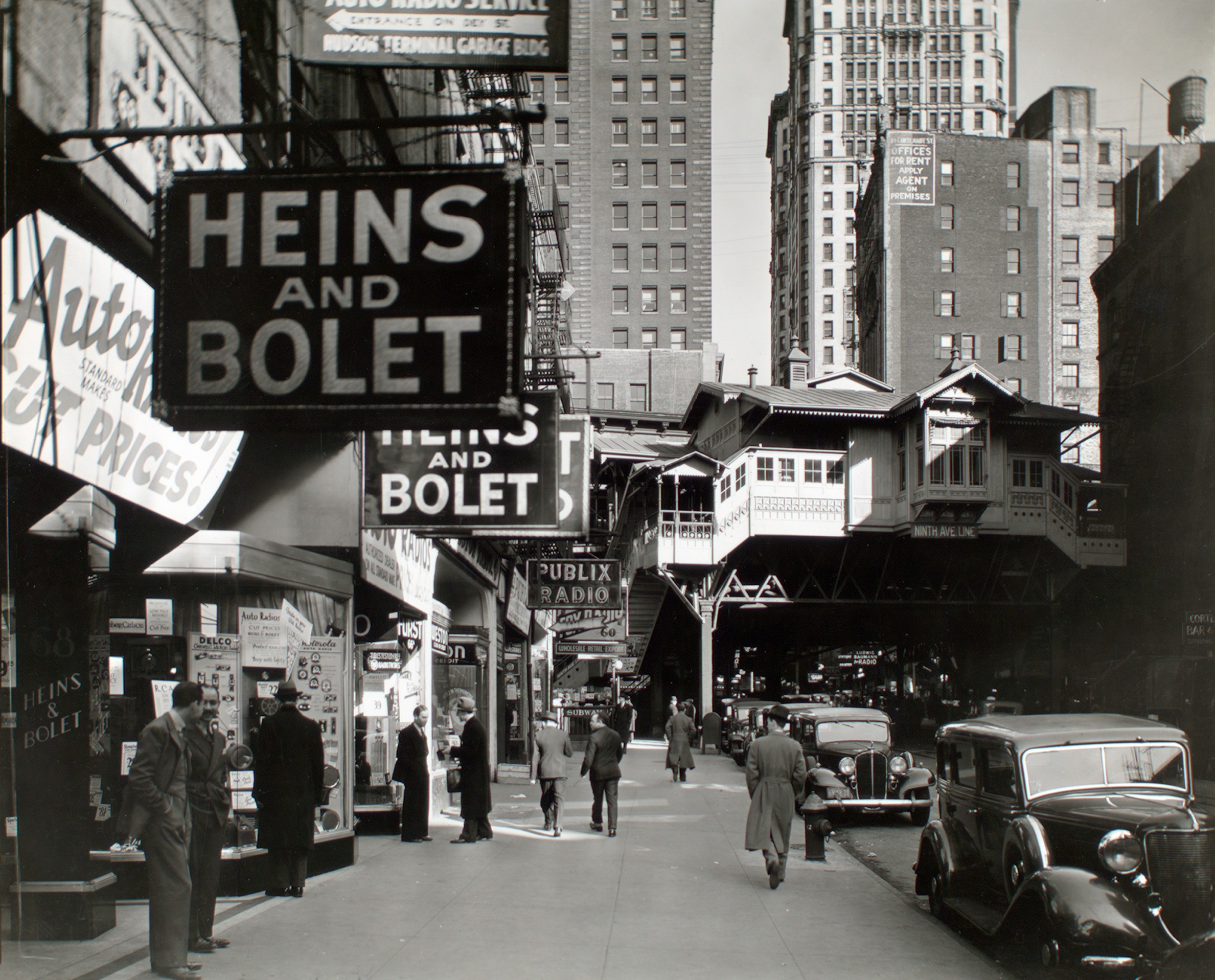
But the boom wouldn’t last. By the end of the 1950s, Lower Manhattan was changing, with waterfront shipping becoming less important in the age of trucking and air travel.In the early 1960s, business and government leaders began drawing up plans to revitalize the area by building a new World Trade Center, which would require razing many of the Radio Row buildings.
The Radio Row merchants tried to oppose these plans, filing lawsuits and leading protests in the streets. At one point, store owners marched along Cortlandt, Dey and Liberty streets carrying a coffin containing “Mr. Small Businessman.” They lobbied then-Mayor John Lindsey against the project, but commerce and labor groups were fighting in favor of it to fight the economic slump in the city.
Eventually, the Port Authority offered Radio Row merchants $3,000 (more than $30,000 today) to relocate, and many did, moving away to Canal Street, Union Square and Times Square. The World Trade Center project moved forward, though a critic in Harpers at the time noted that it would displace “thirteen historic, living and breathing square blocks of the city.”
Park’s installation, which has been running indefinitely since its 2024 launch, captures some of the densely packed chaos of the original Radio Row. Park’s art is made of discarded technology, particularly TVs that were obsolete after broadcasts switched over to digital systems in 2009. The artist is giving them new life through sensors, coding and complicated wiring to connect it all. It creates a feedback loop between humans and technology, which was what Radio Row did in the first place. His art contains a lot of screens; but yes, he does have a few radios, including tiny GE portable radios from the late 1950s.
The space itself is full of piles of screens, towers of old portable TVs and stacks of laptops, all reprogrammed or with their guts ripped out and rewired. It looks like a mad tinkerer’s workshop organized into an art project, which is more or less what it is (Park even works on new pieces in a small section of the gallery). There are some particularly impressive pieces, too, including a digital flame in a hollowed out screen that is tied to the real wind speeds outside. Blowing on the flame will extinguish it before it digitally relights, a facet that feels almost as magical as the first radios must have seemed in the 1920s.
Park said that the proximity to Radio Row makes him feel even more connected to his gallery space,
“During [Radio Row’s heyday], there was a lot of DIY culture and people hanging out together,” he said. “I love the idea of how technology is evolving, and how it influences our lives.”
main photo: courtesy Silverstein Properties


